













Description
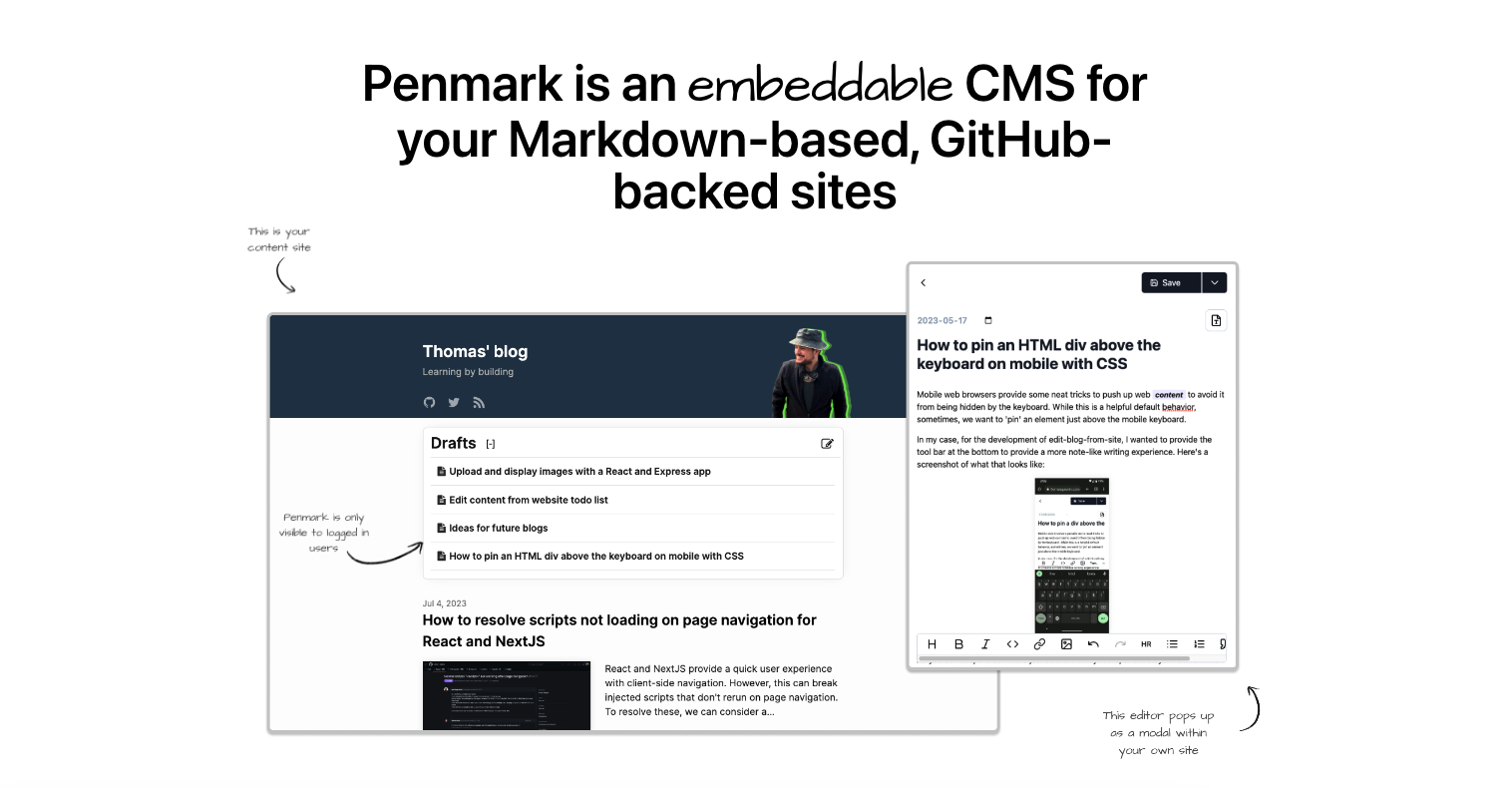
Pages CMS is a content management system that works directly on a GitHub repository. Content and media are stored as files in the repo, so there is no database, no API and no extra backend to run. It is built for static site generators and frameworks, and it suits sites that already live in Git. The editor offers a visual interface with rich text and syntax highlighting, a media manager with drag-and-drop uploads and multi-file selection, and full-text and faceted search. Content types, views and search can be configured, and team members can be invited by email without needing their own accounts on the platform. The site says it works with any website or app hosted on GitHub and is fully responsive on mobile. Features planned for later include file storage with AWS S3 and Cloudflare R2, scheduled content updates, granular permissions, analytics integrations and inline comments. The project is MIT licensed, can be used through the online version, deployed on Vercel, or self-hosted, and the author says that pull requests and issues are welcome. The site notes that GitHub is the only supported host for now.…
Highlights
- Edits content stored in a GitHub repo
- No database or extra backend
- Visual editor with rich text
- Media manager and full-text search
- Invite users by email
Ratings & Reviews
No ratings yet
Be the first to rate Pages CMS.
People also visit
Pages CMS FAQ
What is Pages CMS?
A content management system that edits files in a GitHub repository, so a static site's content and media can be managed through a web editor.
Is it free?
Yes. The site says it is 100% free, whether you use the online version, deploy it on Vercel, or self-host it.
What license is it under?
The site says it is MIT licensed.
Does it need a database?
No. It works with the files in your GitHub repository, with no database or API.
Does it support GitLab or Bitbucket?
No. The site says only GitHub is supported for now, though GitLab and Bitbucket could be added.
Can my team edit without a GitHub account?
The site says you can invite users by email, so they do not need their own account on the platform.
What is still coming?
File storage with S3 and R2, scheduling, permissions, analytics and inline comments are marked as coming soon.