









Description
GraphJSON is an event analytics service for apps that send structured JSON events. Your application sends each event with a plain HTTP POST, and every JSON field becomes available for exploration straight away, without defining a warehouse schema first. You can filter, group, compare and chart events with point-and-click tools, organise them into collections, and build customisable dashboards. For deeper questions you can move to full ClickHouse SQL notebooks, with joins, window functions, funnels and cohort queries, and chart the results in the same place. Alerts can watch important metrics, retention settings let you expire data you no longer need, and dashboards can be embedded for customer-facing analytics. The site offers one-click integrations for Vercel, Segment and Stripe, and says no SDK is required. It recommends logging from your server, because a browser request would expose your API key. The free Spark plan covers up to 5,000 stored events, and the usage-based plan charges a published rate per million stored events.…
Pricing
- Spark$0/ month
- Usage-based$12per million/month
Highlights
- Send JSON events with a plain HTTP POST
- Point-and-click charts and dashboards
- Full ClickHouse SQL notebooks on the usage-based plan
- Alerts and configurable data retention
- One-click integrations for Vercel, Segment and Stripe
Ratings & Reviews
No ratings yet
Be the first to rate GraphJSON.
People also visit
EventSend
Track app's events in a searchable feed, route them to Slack, phone or webhook
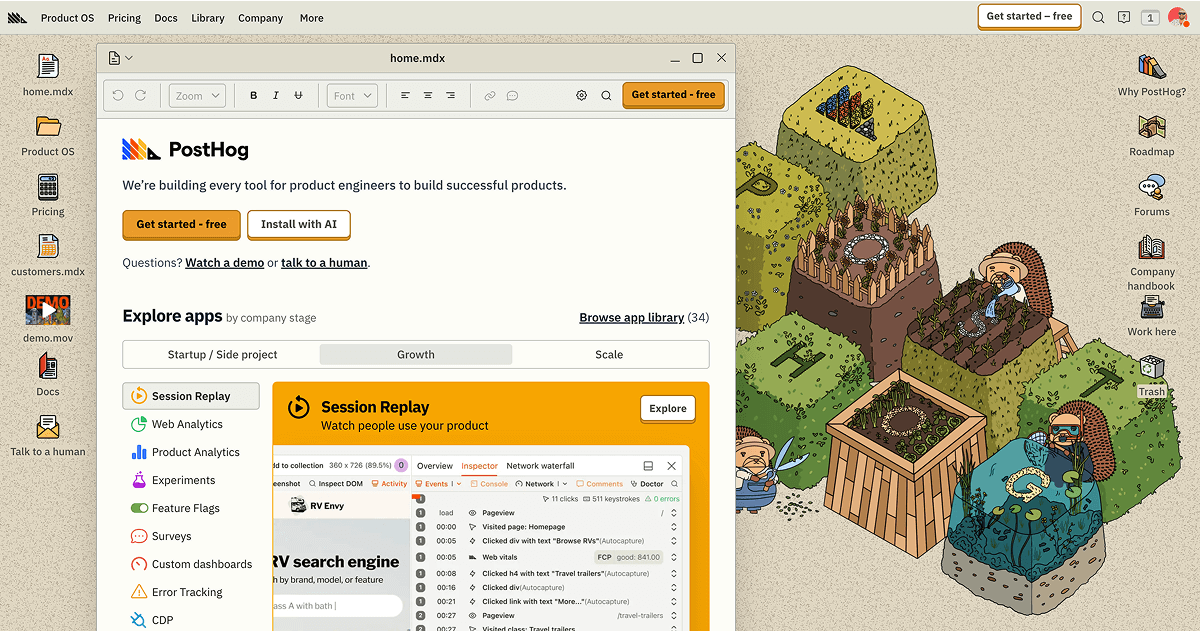
PostHog
Analytics with autocapture, session recordings, feature flags, heatmaps and more

analytics-events
Add product analytics events to track user interactions in the Metabase frontend
GraphJSON FAQ
What is GraphJSON?
A managed event analytics platform. Your app sends JSON events over HTTP, and GraphJSON makes each field available for exploration, dashboards, alerts, ClickHouse SQL and embeds.
Do I need to install an SDK?
No. Any language or runtime that can send an HTTP request can log events. The site generates ready-to-run snippets for common languages.
Should I log from the browser or the server?
From your server where possible, because a browser request would expose your GraphJSON API key to anyone who opens developer tools. Browser events can go through an endpoint you control, which adds the key.
Do I have to run a database?
No. GraphJSON runs event storage, ClickHouse, the query layer, dashboards and embeds. You send events and choose how long each collection keeps them.
How soon can I query a new event?
Events are generally available to explore as they arrive, with no daily ETL job. The site does not publish a guaranteed maximum delay.
How much traffic can I send?
The public ingestion limit is 40 requests per second per workspace. The bulk endpoint accepts up to 50 events per request, so batching is the way to send more events.
How is billing calculated?
GraphJSON records a watermark of your stored-event count every 15 minutes, and at month end billing uses the highest watermark from that month, according to the site.
What are the best GraphJSON alternatives?
Popular alternatives to GraphJSON include Aggregations.io, EventSend and PostHog. See all GraphJSON alternatives