


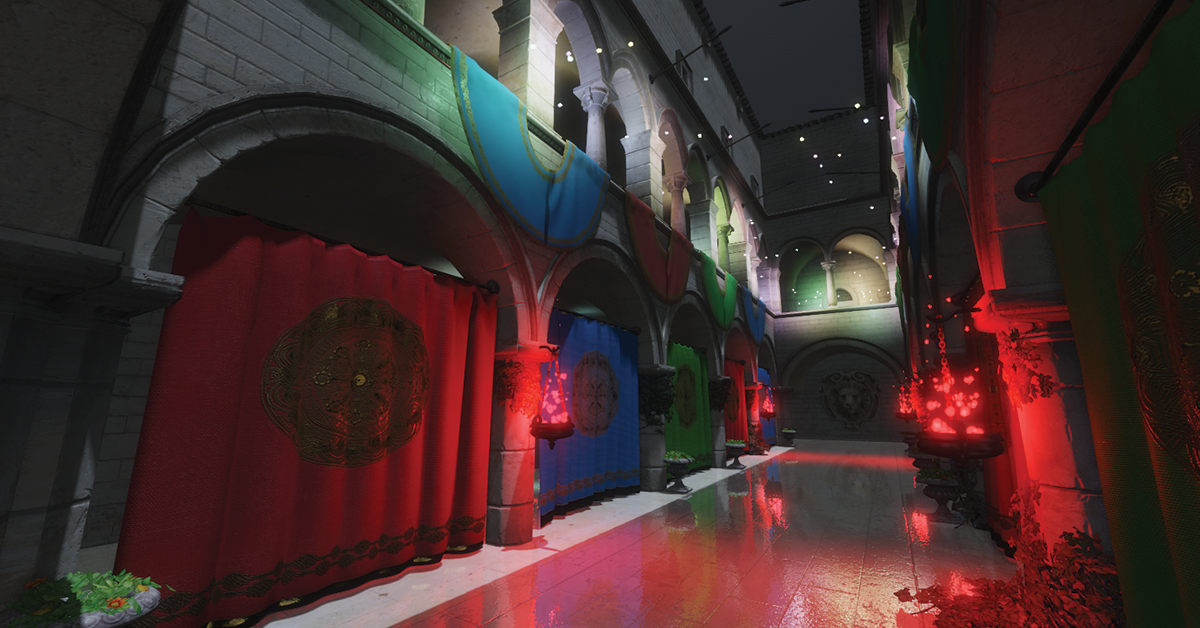



Description
Shadeup is a domain-specific language, extended from TypeScript, that makes WebGPU shaders easier to write. It removes much of the boilerplate of WebGPU and trades low-level detail for faster iteration, and it aims to be a low-friction environment for learning, experimenting and building graphics on the web. Shadeup keeps CPU and GPU code in the same file, with shared types and functions, and you can call functions on both the CPU and GPU sides of an app. Uniforms do not need to be declared: a shader can use CPU variables such as the mouse position directly, and this works with scalars, vectors, structs, buffers, textures and arrays. The project's philosophy is to make advanced algorithms easy to read and learn from by stripping away fluff. It says it does not yet support every part of WebGPU. The project is open source and documented, with docs, a browse section and Discord communities, and its code is on GitHub under AskingQuestions.…
Highlights
- Write WebGPU shaders with less boilerplate
- Shared CPU and GPU code in one file
- Uniforms without declarations
- Open source and documented
Ratings & Reviews
No ratings yet
Be the first to rate Shadeup.
People also visit

webgpu-threejs-tsl
Comprehensive guide for developing WebGPU-enabled Three.js applications
Shadeup FAQ
What is Shadeup?
A language extended from TypeScript that makes WebGPU shaders easier to write, with less boilerplate.
Who is it for?
Beginners and people learning graphics programming, according to the site.
Is it open source?
Yes. The site calls it open source and documented, and the code is on GitHub at AskingQuestions/Shadeup.
Does it support all of WebGPU?
No. The site says it does not yet support everything in WebGPU.
What are the best Shadeup alternatives?
Popular alternatives to Shadeup include Shaders, HipScript and WebGPU Sponza Demo. See all Shadeup alternatives